
Home / Projects / Building a climate positive campus / Project Leap
Project Leap
The first big step towards climate positive — reducing greenhouse gas emissions by over 50% by the end of 2027.
> 50%
Reduction in GHG emissions by end of 2027
50,000
Metric tonnes of GHG emissions saved annually
10,000+
Homes' energy use saved per year
What it involves
Project Leap will reduce greenhouse gas (GHG) emissions through campus-wide sustainability solutions, including transforming how we heat and cool our campus. This includes:
- Capturing and storing heat for use in the colder months using the new geoexchange system under Front Campus
- Phasing out natural gas in favour of electrification for heating
- Reducing energy use and emissions by upgrading to energy-efficient LED lighting in 38 buildings
- Optimizing energy used for air distribution systems in key research laboratories
Meeting 2030 targets ahead of schedule
Project Leap will reduce GHG emissions by 50% by the end of 2027, meeting U of T and national 2030 carbon reduction targets ahead of schedule.

NOTES
Based on fiscal year 2023-24 energy consumption data. Projections as of March 2025.
Climate positive: Going beyond zero carbon emissions through renewables and other technologies.
Canada’s 2030 target, 40% below 2005 levels.
U of T 2030 target, 37% below 1990 levels.
What's happening across campus
Major work is underway across the St. George campus through four interconnected streams.
U of T geoexchange: Transforming how we heat and cool our campus
Stand on Front Campus and you’re standing on Canada’s largest urban geoexchange system — a giant thermal battery. The geoexchange consists of 372 U-shaped pipes, each reaching 250 metres deep, about half the height of the CN Tower. In summer, it captures and stores excess heat from campus buildings. This heat is pumped deep underground and stored using a water-glycol mixture. In winter, this heat is returned to warm campus buildings.
SCALE
372 pipes, 250m deep
Will serve 30+ buildings
Equivalent to 250,000 electric vehicle batteries
STATUS
Geoexchange completed fall 2024
Building connections underway, expected to finish mid- to late 2026
Central Steam Plant: Phasing out natural gas in favour of electrification
A significant portion of the St. George campus’s emissions come from the Central Steam Plant, where gas-fired boilers produce steam that is used to heat most buildings on campus — as well as some off-campus buildings including the Royal Ontario Museum.
As part of Project Leap, one of the gas-fired boilers is being replaced with two electrode steam boilers and the plant’s natural gas-fired cogeneration unit has been shut down, saving 29,000 tonnes of GHG annually — the energy equivalent of powering nearly 6,800 homes for a year.
IMPACT
29,000 tonnes GHG saved annually
Equivalent to powering ~6,800 homes
STATUS
Two new electric boilers installed summer 2025
Expected to be operational in 2026
Lighting upgrades: Switching to energy-efficient LEDs across 38 buildings
Lighting in 38 buildings has been upgraded to energy-efficient LEDs — using up to 80% less energy than traditional fluorescent lights, lasting 3–8 times longer and containing no toxic mercury.
EXPECTED IMPACT
40% reduction in lighting energy use
Electricity equivalent to 520+ homes per year
STATUS
Completed late 2025
Leading the way: Terrence Donnelly Centre, Leslie L. Dan Pharmacy Building, Medical Sciences Building
Terrence Donnelly Centre for Cellular & Biomolecular Research
- Heat recovery and geoexchange connection
- Air distribution upgrades in key laboratories
- LED lighting
- Water fixture upgrades
IMPACT
850 tonnes of GHG emissions saved annually
4,900 m3 of water saved annually
~1,500,000 kWh saved annually
STATUS
LED lighting completed late 2025
Water fixture upgrades scheduled mid-2026
Heat recovery, geoexchange connection and air distribution upgrades expected mid-2026
Leslie L. Dan Pharmacy Building
- Heat recovery and geoexchange connection
- Air distribution upgrades in key laboratories
- Water fixture upgrades
IMPACT
~2,000 tonnes of GHG emissions saved annually
1,600 m3 of water saved annually
~1,517,000 kWh saved annually
STATUS
Water fixture upgrades scheduled mid-2026
Heat recovery, geoexchange connection and air distribution upgrades underway, expected completion mid-2026
Medical Sciences Building
- Heat recovery and geoexchange connection
- LED lighting
IMPACT
~4,600 tonnes of GHG emissions saved annually
STATUS
LED lighting completed late 2025
Heat recovery and geoexchange connection underway, expected completion mid-2026
Latest updates

The university has installed two new electric boilers, reducing reliance on natural gas for heating the St. George campus and helping slash fossil fuel consumption by 75%.

Stroll around King’s College Circle this summer and you’ll find more than just flowers in bloom — construction crews are hard at work connecting key buildings to Canada’s largest urban geoexchange system.
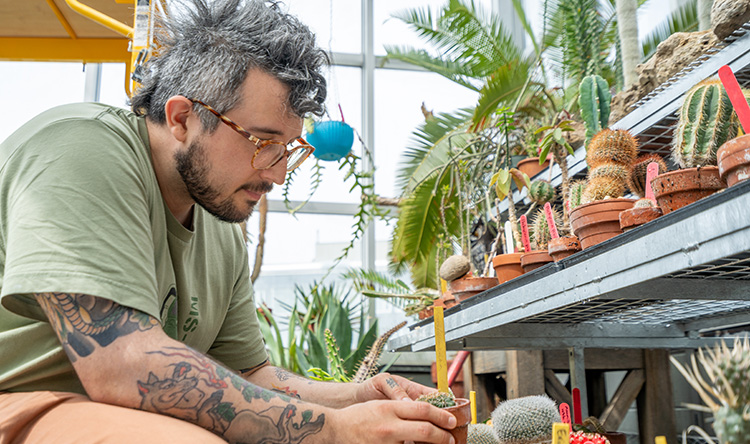
Energy-saving LED lights are transforming research capacity in U of T’s growth facilities, unlocking new types of research while reducing energy consumption.
Interested in the geoexchange?
Faculty, staff and students can request a tour of the geoexchange system or host a guest presentation on Project Leap.